Why real recovery goes deeper than rest — and how intentional ritual is the missing piece in your wellness strategy.
There’s a version of tired that sleep doesn’t fix. You know it — the kind that lives in your shoulders, behind your eyes, somewhere in the space between your last exhale and the next demand placed on you. You’ve rested. You’ve even taken the weekend. But something remains.
That something has a name: chronic nervous system dysregulation. And in the modern world, it has become the baseline — so common we’ve stopped noticing it, and so normalized we’ve started calling it personality.
At Ziva, we were built around a single conviction: the body doesn’t need to be pampered. It needs to be recalibrated.
The Gap Between Relaxation and Restoration
The wellness industry has spent decades perfecting relaxation. Scented candles. Ambient playlists. Warm rooms with soft lighting. And while none of that is wrong, it addresses the surface — the sensation of calm — without touching the system underneath.
True restoration is physiological. It requires your nervous system to shift out of sympathetic dominance — that low-grade fight-or-flight state most of us live in — and move into parasympathetic recovery. The difference is measurable: in cortisol levels, in heart rate variability, in sleep architecture, in muscular tension patterns, in pain thresholds.
You can’t get there by accident. And you can’t rush it with a 30-minute Swedish massage between meetings.
“Restoration is not a feeling you chase. It is a state you create — through sequence, touch, breath, and the wisdom to slow down on purpose.”
The ZiVa Method: A Ritual Built on Evidence
The ZiVa Method is a structured East-West ritual system — not a menu of services, but a deliberate sequence designed to guide the nervous system through measurable stages of release and integration. It draws on the ceremonial pacing of Eastern wellness traditions — where healing unfolds over time, not in spite of it — and the anatomical precision of Western therapeutic practice.
Every element in a ZiVa ritual earns its place:
- Foot Reflex StimulationActivates reflex zones mapped to the body’s organs and systems, initiating a systemic parasympathetic response from the ground up. Circulation improves. The body receives the first signal: it is safe to release.
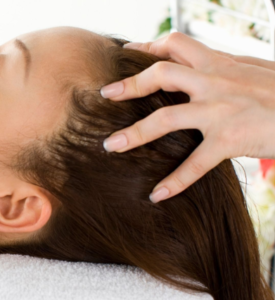
- Scalp ReleaseThe cranial fascia is among the most tension-dense tissues in the modern body. Targeted scalp release reduces referred pain patterns, supports sleep quality, and creates measurable decompression in the neck and upper cervical spine.
- Shoulder DecompressionYears of desk posture, digital device use, and emotional holding compress the shoulder girdle. Structured release restores range of motion, reduces upper-back pain, and directly impacts breathing capacity.
- Guided Breath AwarenessIntentional breathwork woven throughout the ritual — not as an afterthought, but as the thread that ties the physiological work together. Breath is the fastest available path to nervous system state change.
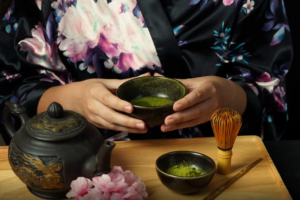
- Tea Ceremony: Transition & IntegrationThe ritual does not end on the table. The tea ceremony creates a conscious bridge between treatment and the world — grounding the body, extending the effects, and honoring the work that was just done. Integration is where restoration completes itself.

Why Sequence Matters More Than Technique
Any individual component of the ZiVa Method — reflexology, scalp massage, breathwork — offers value on its own. But the power of the ZiVa ritual lies in the sequence. The nervous system doesn’t reset in a single moment; it shifts through stages. Each step in the ZiVa ritual prepares the body for the next, creating a cumulative effect that no single treatment can replicate.
This is what separates ritual from service. A service delivers a result. A ritual moves you through a transformation.
Eastern traditions understood this for millennia — that the ceremonial pacing of healing, the deliberate transitions between states, the symbolic value of tea and breath and touch — were not cultural decoration. They were the mechanism.
What Recovery Actually Looks Like
Clients who experience the ZiVa Method regularly report improvements that extend well beyond the treatment room: deeper, more restorative sleep. Reduced frequency of tension headaches. Improved posture awareness. Lower baseline anxiety. A felt sense of groundedness that persists into the working week.
These aren’t anecdotal luxuries. They are the predictable downstream effects of a nervous system that has genuinely shifted state — one that has been given the conditions, the time, and the skilled touch it needed to reset.
Positioning ZiVa in Your Long-Term Wellness Strategy
If you’ve been building a premium wellness strategy — one that reflects who you are now, not just what you used to need — ZiVa is designed for exactly that client. The modern professional who understands that performance and recovery are inseparable. Who has moved past the idea of “treating themselves” and into the practice of maintaining themselves.
Premium wellness isn’t about price. It’s about precision, intentionality, and the belief that your body deserves work as rigorous and considered as any other investment you make.
The ZiVa Method was built for people who want results they can feel on Monday morning — not just Saturday afternoon.