Ziva Wellness Spa ♦ Stress Recovery
The science of stress recovery — and why the modern body needs more than a good night’s rest to truly reset.
You’re doing everything right. You’re sleeping eight hours. You’re taking weekends. You’ve downloaded the meditation app, cut back on coffee, and started going to bed before midnight. And yet — Monday morning arrives and the fatigue is still there. Settled into your body like a guest that never actually left.
This is not a sleep problem. This is a stress recovery problem. And the difference matters more than most wellness advice will ever tell you.
What Burnout Actually Does to Your Body
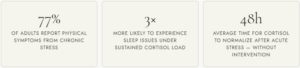
Burnout is not a mood. It is a physiological state — a measurable pattern of hormonal dysregulation, autonomic nervous system imbalance, and chronic muscle tension that accumulates over months and years of unresolved stress load.
When the body is under sustained stress, it runs on cortisol and adrenaline — the hormones of alertness and survival. This is useful in short bursts. But when the stress never fully resolves, the body stops cycling out of that state. The sympathetic nervous system — your fight-or-flight branch — becomes the default setting. And sleep, while restorative in many ways, does not fully reset a nervous system that is structurally dysregulated.
You can sleep for ten hours and wake up in the same physiological state you went to bed in. The tension in your shoulders. The shallow breath. The underlying hum of alertness that never quite switches off.
The Difference Between Rest and Recovery
Rest is passive. You stop doing things. You lie down. You close your eyes. Rest allows the body to pause — but it does not actively move the nervous system from one state to another.
Recovery is active. It requires the nervous system to receive signals that it is genuinely safe — not just temporarily undisturbed. This distinction is where most wellness strategies fall short. A quiet evening is rest. A structured ritual that guides the body through deliberate stages of release, breath, and integration — that is recovery.
“The nervous system does not reset on its own timeline. It resets when it receives the right inputs — in the right sequence, with the right intention.”
This is the premise the ZiVa Method was built on. Not that rest is wrong — but that rest alone is insufficient for a body carrying modern levels of stress load. The body needs skilled, intentional intervention to move from sympathetic dominance into genuine parasympathetic recovery.
What Genuine Stress Recovery Looks Like
True recovery has measurable markers. Heart rate variability increases. Cortisol levels normalize. Muscle tension in the upper trapezius, cervical spine, and cranial fascia releases. Breathing deepens and slows. The body stops bracing.
These are not feelings. They are physiological events — and they require specific inputs to occur. Foot reflex stimulation signals systemic safety from the ground up. Scalp release addresses one of the most tension-dense fascia networks in the modern body. Shoulder decompression restores the breathing mechanics that chronic postural compression has limited. Guided breathwork threads it all together, giving the nervous system the rhythmic, co-regulated signal it needs to complete the shift.
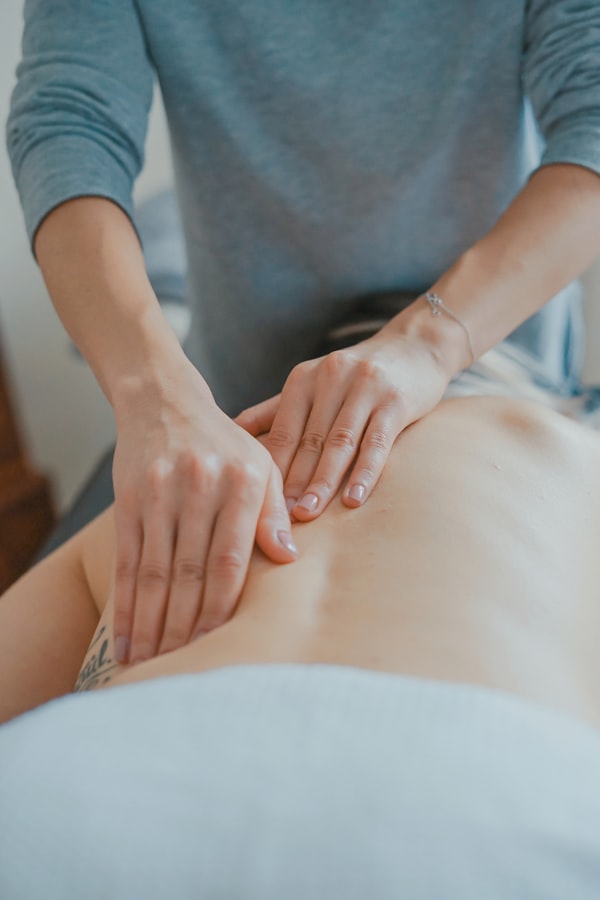
Shoulder decompression — restoring breath mechanics and posture alignment.
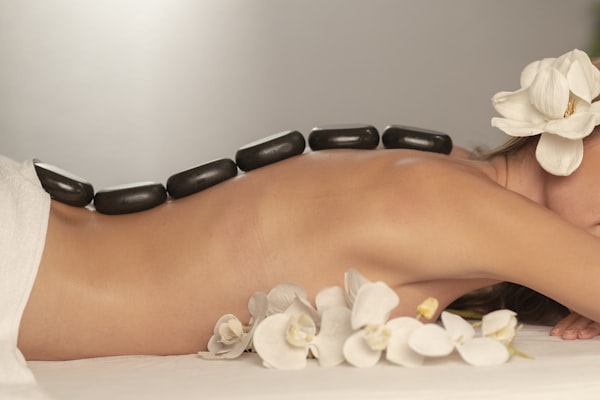
The tea ceremony — grounding the body and extending the ritual’s effects.
The Role of Integration — Why the Tea Ceremony Matters
One of the most overlooked elements of genuine stress recovery is integration — the transition period after therapeutic work where the body consolidates what it has just experienced. Most treatment environments end abruptly: the session closes, you’re handed your coat, the door opens. The nervous system barely has time to register the shift before the next demand arrives.
The ZiVa tea ceremony exists precisely to protect this window. A warm cup, a moment of stillness, a conscious breath before re-entering the world. It is not decorative. It extends the physiological work of the ritual — allowing the parasympathetic state to deepen and stabilize rather than collapse the moment stimulation resumes.
Eastern wellness traditions understood this long before neuroscience confirmed it. The ceremony is the final — and in some ways most critical — stage of recovery.
Who This Is For
The ZiVa client is not someone who is visibly falling apart. They are high-functioning, self-aware, and accustomed to performing at a level that masks how depleted they actually are. They have tried rest. They have tried holidays. They are looking for something more precise — a practice that matches the rigor they bring to every other area of their life.
If you have ever said “I’m tired but I can’t switch off” — your nervous system is telling you something sleep cannot fix. ZiVa was designed for exactly that.
Sleep is the floor, not the ceiling. Real recovery requires intention, sequence, and skilled touch — a system designed to give your nervous system what rest alone cannot. That is the ZiVa Method.