Ziva Wellness Spa · Body Reset
Why Your Shoulders Carry More Than You Think — and How to Finally Let Go.
The link between shoulder tension, stress, and the nervous system — and what the ZiVa shoulder decompression ritual does about it.
Shoulder Decompression Stress Recovery ZiVa Method 7 min read

Shoulder decompression for stress recovery is one of the most needed — and most missed — steps in modern wellness. Most people know their shoulders are tight. However, few understand why. The tightness is not just muscle strain. It is the body holding on to something it has not yet had the chance to put down.
In this post, we look at why the shoulders carry so much stress. We also explain what happens when ZiVa releases that tension — and why the effect goes far beyond the shoulders alone.
Why the shoulders hold so much stress
The body has a stress response. When it senses danger, it acts fast. It raises the shoulders, pulls them forward, and braces the upper chest. This is the body getting ready to fight, run, or protect itself.
In real danger, this works well. The threat passes, and the shoulders drop back down. However, modern stress does not work this way. The emails keep coming, the deadlines stack up, and the mind stays busy. As a result, the shoulders never fully drop. They stay raised and held — all day, every day.
Over time, this creates real harm. The muscles stay tight, the joints lose space, and the nerves that run through the neck and shoulders get pressed on. Moreover, the chest closes in and breathing becomes shallow. The body gets stuck in a pattern it can no longer exit on its own.

What tight shoulders do to the rest of the body
Most people treat tight shoulders as a local problem. They stretch the neck, roll the shoulders, and book a single massage. However, the real impact of shoulder tension reaches far beyond the upper body.
First, shallow breathing follows. The rib cage cannot expand fully when the shoulders stay raised and forward. Less air means less oxygen in the blood. Less oxygen means slower thinking, lower energy, and a body that stays alert rather than restful.
Second, posture changes. The head moves forward to match the raised shoulders. This adds extra load on the spine. Furthermore, the lower back begins to overwork to make up the difference. One tight area creates a chain of imbalance throughout the whole body.
Third, the nervous system stays switched on. The same muscles that raise under stress also send signals back to the brain. Those signals say: the threat is still here. As a result, the stress response keeps running — even when there is nothing left to react to.
“The shoulders are where the body stores what the mind cannot process. Release the shoulders, and the whole system begins to breathe again.”
What shoulder decompression for stress recovery actually does
Shoulder decompression is not a deep tissue massage. It does not press harder on tight spots. Instead, it works with the joints, the tissue layers, and the nerve paths to open space where the body has closed it down.
ZiVa uses a set series of moves. Each one prepares the area for the next. The goal is not to force the muscle to let go. Rather, it creates the right setting so the muscle chooses to release on its own. The difference in how long the result lasts is clear and consistent.
- Joint space opens. The shoulder joint gets space back. Nerves that stress has pressed on begin to ease. The area stops feeling full and tight.
- Tissue layers soften. The thin tissue that wraps the muscles — called fascia — softens and slides freely again. This lets the whole shoulder area move without catching or pulling.
- Breath deepens. As the shoulders drop and the chest opens, the lungs get room to expand. Most clients notice their breath deepen on its own — without trying.
- The stress signal stops. When the shoulders drop, the brain receives a new signal. The threat is over. The nervous system can now shift from alert to rest.
- Posture resets. With the shoulders back in place, the head sits over the spine again. The lower back gets relief. The body finds its natural line without effort.

How shoulder decompression fits inside the ZiVa ritual
ZiVa does not offer shoulder decompression as a stand-alone service. Instead, it sits inside a full ritual sequence. This matters more than most people expect.
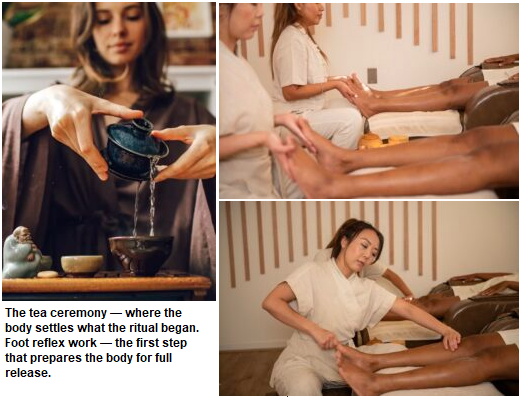
Foot reflex work comes first. It wakes up blood flow and tells the nervous system the body is safe. After that, scalp release eases the tension in the head and neck. By the time ZiVa works the shoulders, the body is already partway into rest. As a result, the shoulders let go more fully — and more quickly — than they would in isolation.
Guided breath runs through the whole session. It keeps the nervous system moving toward calm. And finally, the tea ceremony gives the body time to settle before the day resumes. Together, these steps do what no single treatment can do alone.
Who needs shoulder decompression most
You do not need to be in pain to benefit from shoulder decompression. Most people who need it most do not feel much pain at all. The body adapts. It gets used to holding. The tension becomes the new normal — until it stops being manageable.
Watch for these signs. Your shoulders sit higher than they used to. You catch yourself bracing your jaw or gripping your hands without a clear reason. Sleep does not leave you rested. Your breath is short and sits high in the chest. You feel a dull ache between the shoulder blades that comes back no matter what you try.
These are not small signs. Together, they point to a nervous system that has been holding on for too long. Shoulder decompression for stress recovery gives the body a way to put that load down — safely, fully, and with lasting effect.

What clients notice after their first session
The most common report after a ZiVa shoulder session is simple: “I did not know I was holding that much.” The release surprises people. So does how far it reaches. The head feels lighter. The chest feels open. Breathing comes without effort.
Moreover, sleep that night tends to be noticeably deeper. Pain in the neck, upper back, and between the shoulder blades often reduces sharply. Furthermore, the sense of background tension — that low hum of being slightly on edge — eases too.
These are not side effects of relaxation. They are the direct results of a nervous system that has finally received the signal it needed. The shoulders let go, the brain updates its threat level, and the whole body shifts into a state it has not been in for a long time.